A duck as a gift

A local friend had her husband deliver a beautiful white duck to me. There it sat, its feet tied, resting tamely in the basket of my bicycle in front of our house. „What now?“ I thought to myself.

It was a good thing that I had already arranged for some help in advance. I had asked another local friend from the village to assist me in preparing this feast. However, she made it clear from the start that, in her family, only the men slaughter animals.

OK, who could we call on short notice for this task? Since we share our yard with an elderly man, we asked if he could assist us. Grinning, he retrieved a knife from his house, quickly sharpened it with a stone, then, with a skillful move, placed the duck between his feet, grabbed it by the wings, and began cutting.
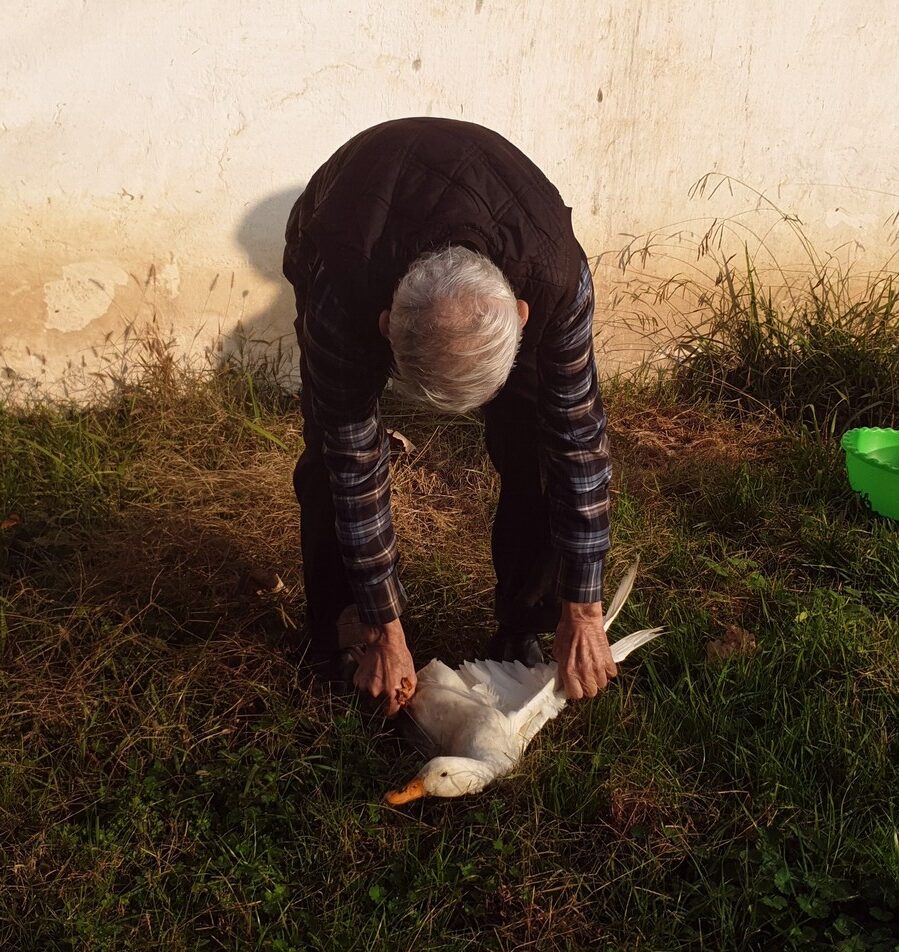
My children watched closely what was happening. Once the feet stopped moving, we placed the lifeless body in a hot water bath before bringing it into the house. There, the delicate task began—plucking the feathers and cleaning out the innards.

How grateful I was for the experienced hands of my friend, so it didn’t take too long until the raw duck was in the pan.

Next came the typical meat filling that is only found here in the south of Azerbaijan: Lavengi, a walnut and onion mixture that is first ground in a meat grinder and then mixed and seasoned.

We stuffed the duck with it and cooked the remaining mixture alongside the meat as a sauce. Soon a delicious smell of meat filled the house. With it we served local rice called plov as a traditional side dish.

One thing was a must: we also brought a full plate to our private butcher. He was amazed that we had prepared one of his favorite dishes that morning. A few days later, when he returned home from the bazaar, he surprised our children with nuts, fruit, and chocolate. A perfect example of life here—a constant give and take.

Summer feeling

We have heard a lot about it, but we have only now experienced how different life is in our town during summer.

At the bazaar, the selection of fresh fruits and vegetables is more extensive than at any other time of the year. At the same time, this brings with it a lot of work, especially for the women, because now the fruits are processed into juice and jam and the vegetables are preserved for the winter.

For an example, in a complex process, Turşu is made out of dried Alça fruits This is a delicious marinade for meat.

The warmer half of the year also brings a welcome change to the diet of grazing animals. The freshly cut grass is transported in a variety of ways. This vehicle picked up its load from our garden.

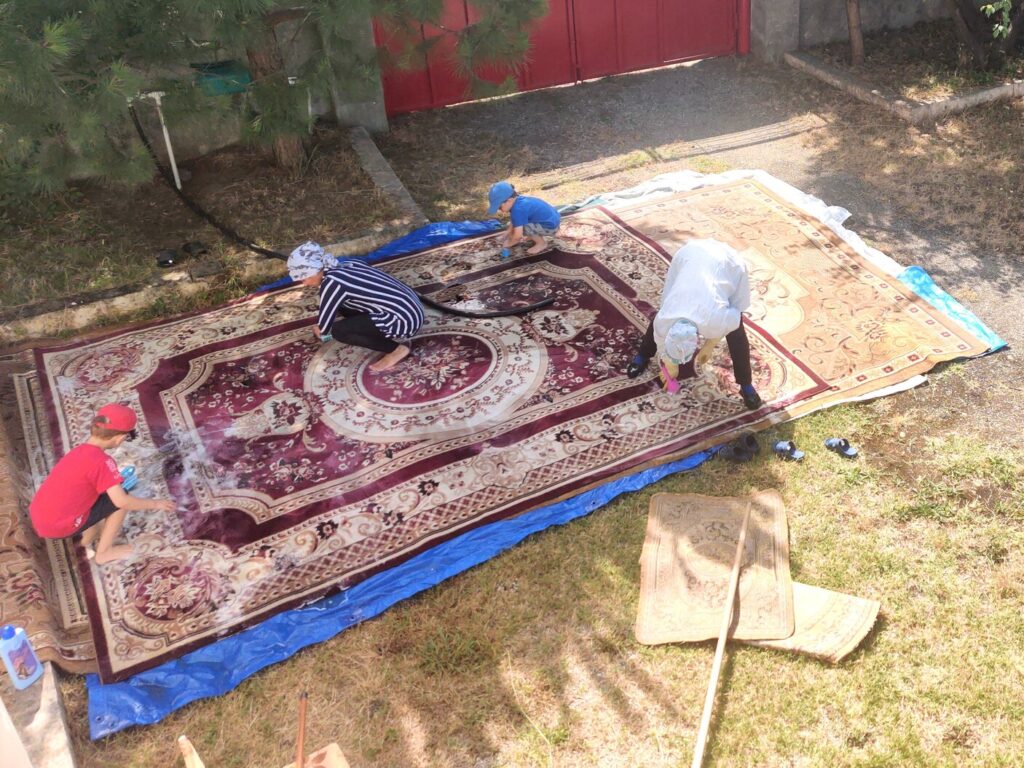
Another summer activity is the thorough washing of the carpets. They are then dried, rolled up and stored in the house. When it gets colder in autumn, they are rolled out again.

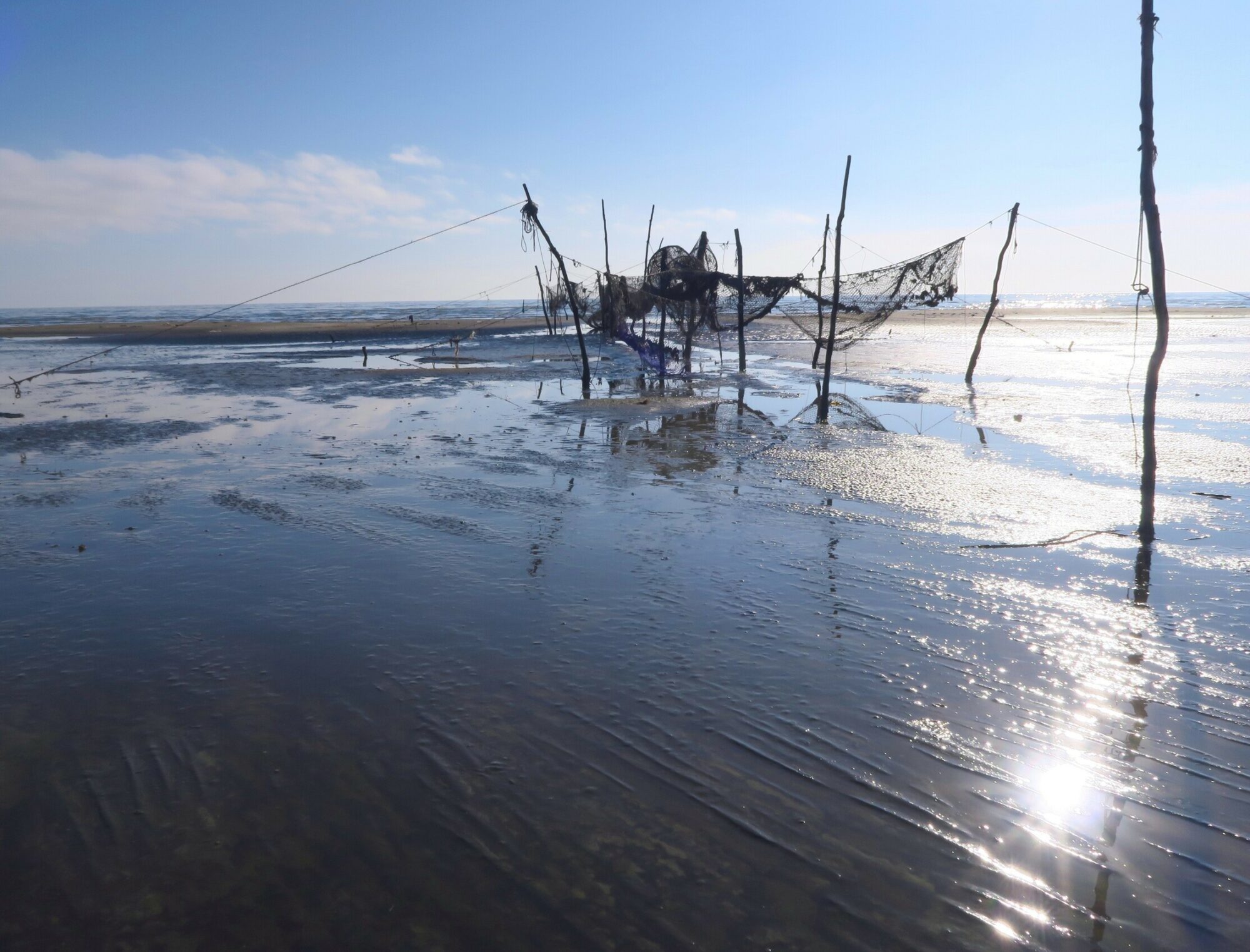
With the hot and humid summer temperatures, a refreshing swim in the sea is very welcome. Countless seating areas are set up on the shore of the Caspian Sea, inviting you to drink tea and linger. The water is pleasantly warm and the dark sand here in the south is full of minerals that are good for the body.

When the temperatures drop a bit in the evening, it is play time. On many street corners there are small tables where the men can immerse themselves in a game over a cup of tea. The board game „Nərd“, which shows great similarities to backgammon, is particularly popular.

Mastering public transportation

With my legs tightly bent, I sit on a seat in the marshrutka and observe as the rest of the passengers get on and find their seats. I am preparing myself for the fact that it may be a while before we set off. After a while, the bus has almost filled up, two seats on the back seat are still available though. A woman with large shopping bags from the bazaar glances in the door and is considering whether she still wants a ride. The chauffeur encourages her to get in because there is still room. She should put her bags right next to the door. Will she squeeze into the back seat next to the only three male passengers or stay in the aisle in front? As I expected, she decides to stand, because the unwritten rule is that the back row is reserved for men.

Besides this rule, there are other unwritten rules that you should know before boarding public transport in southern Azerbaijan.

  • The marshrutka only sets off when pretty much all the seats are filled, because the chauffeur earns his money with every single passenger.
  • Timetable? There is none here. Those who wait patiently at the roadside are usually rewarded with a marshrutka passing at some point.
  • Women sit in the front of the bus and the men in the back.
  • Pregnant women, travelers with small children and elderly people are immediately offered a seat.
  • Men offer their seats to women, except for the back row where only men sit.
  • Each passenger pays the fee for the ride directly to the chauffeur when getting off.
  • There are only a few official bus stops on each bus route. However, the bus can be hailed at any time with a simple hand gesture. To get off, tell the chauffeur where to stop.

So, with these tips I wish you a good journey. Or «Yaxşı yol» as they say here.

Feijoa – an exotic, unique, refreshing fruit

It grows right on our doorstep! Reason enough to introduce this fruit to you in more detail. The feijoa plant is native to southern and tropical regions such as New Zealand, Australia, South America and southern Azerbaijan. During springtime, beautiful red and white flowers grow on the bush-like tree. From these, green, plum-sized, egg-shaped fruits are formed.

Its skin is hard, but the flesh is soft and white. The taste is slightly sour and refreshing, similar to a mix of pineapple and strawberries. Furthermore, they are also rich in minerals and vitamin C.

The feijoa harvest season begins at the end of October. The individual fruits are either eaten raw or processed into compote and jam. For the first time, I made my own compote together with a local friend in Azerbaijani style. You need a lot of feijoa fruits and a lot of sugar, water and jars. First we washed and cleaned the feijoa fruits, then we removed a little of the top and bottom. Then we filled the fruit into the hot boiled jars, added sugar and filled them up with boiling water. Then we closed them with the lid and covered the finished jars with a warm cloth so that they cooled slowly.

Now these jars are waiting to be drunk by the next guest at a shared meal. Yes, here the compote is mainly consumed as a sweet drink on special occasions. If you like, you can eat the fruit at the end. Cheers!

Novruz – spring is here

Novruz is the name of the spring celebration that also marks the beginning of the new Persian year. The festivities start on March 20 and last about a week. The first day of the celebration is spent mainly within the family. Afterwards, the doors of the house are open, the table is richly set, as guests may come at any time.

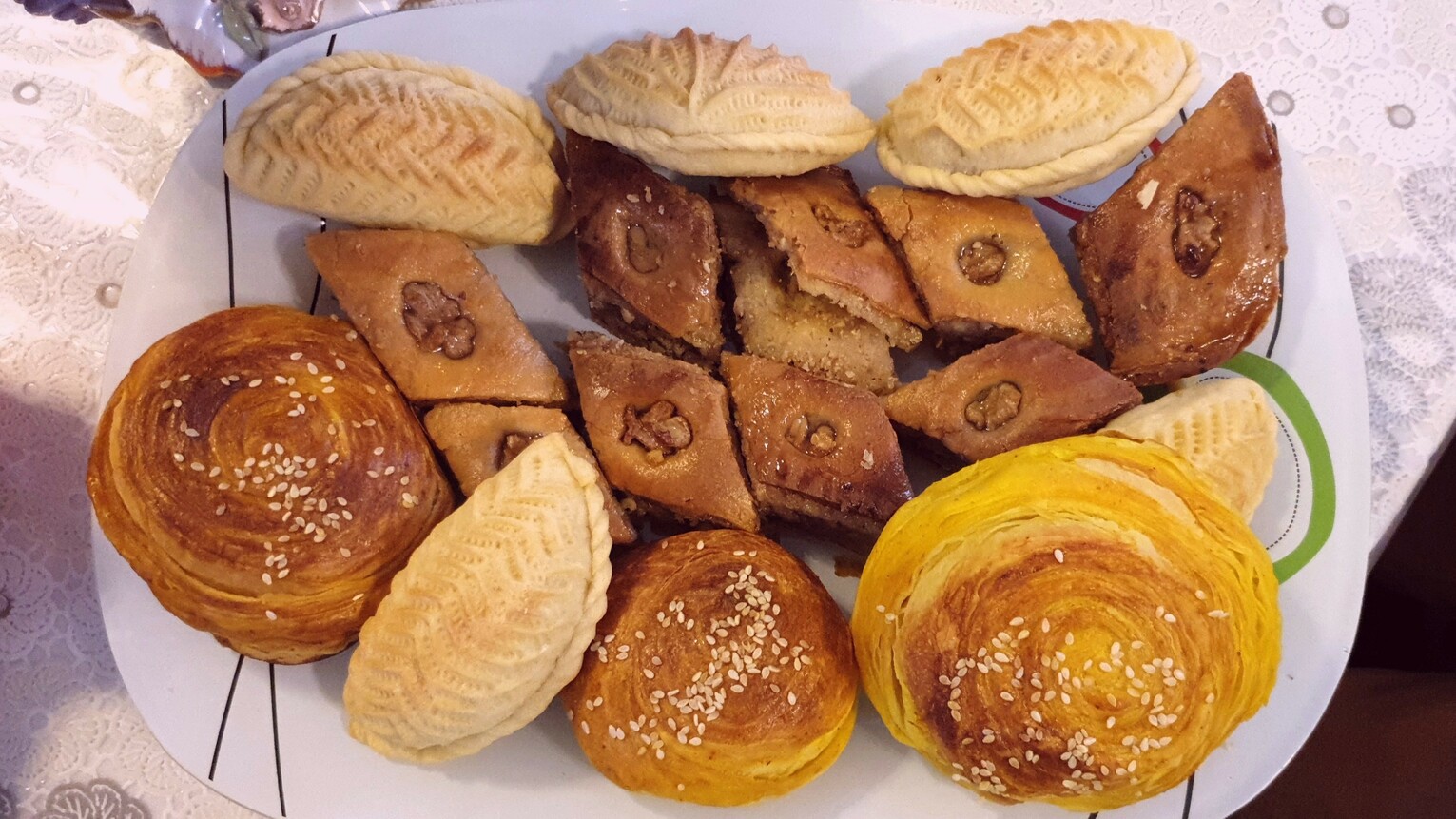
These three national pastries: Paxlava, Şəkərbuğa, Qoğal can be found on all Novruz tables. Their shapes resemble the stars, moon and sun.

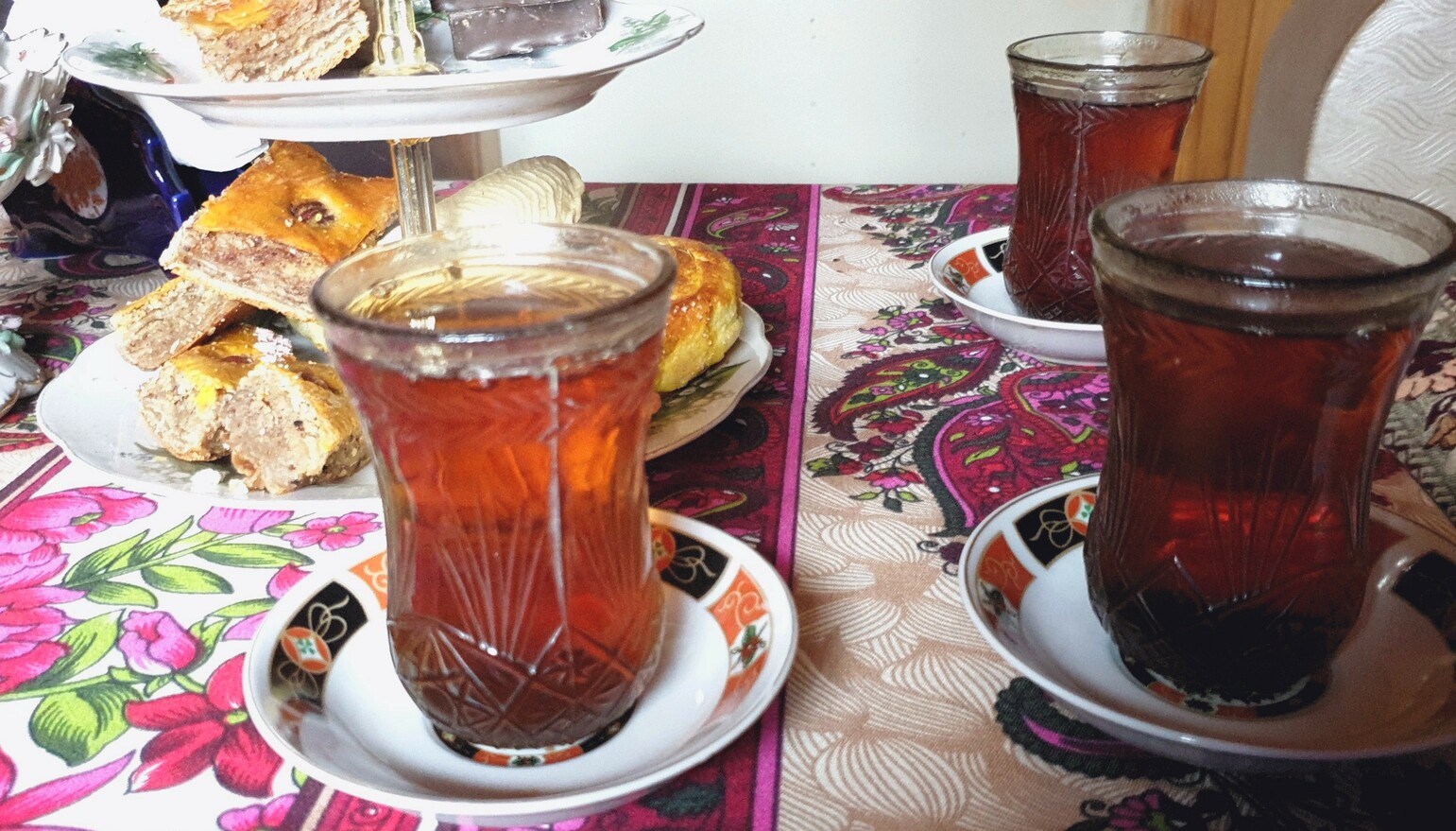
Freshly prepared tea is served in each house.

Səməni is a pot with sprouted wheat seeds, which is placed on the table during the celebration. This is considered a symbol of the fertility of spring.

As a family, we have recently moved and do not yet know our new neighborhood very well. These festive days were an ideal opportunity for us to deepen initial contacts. In every house, we congratulated each other on the occasion with the greeting: „Novruz bayramınız mübarək.